
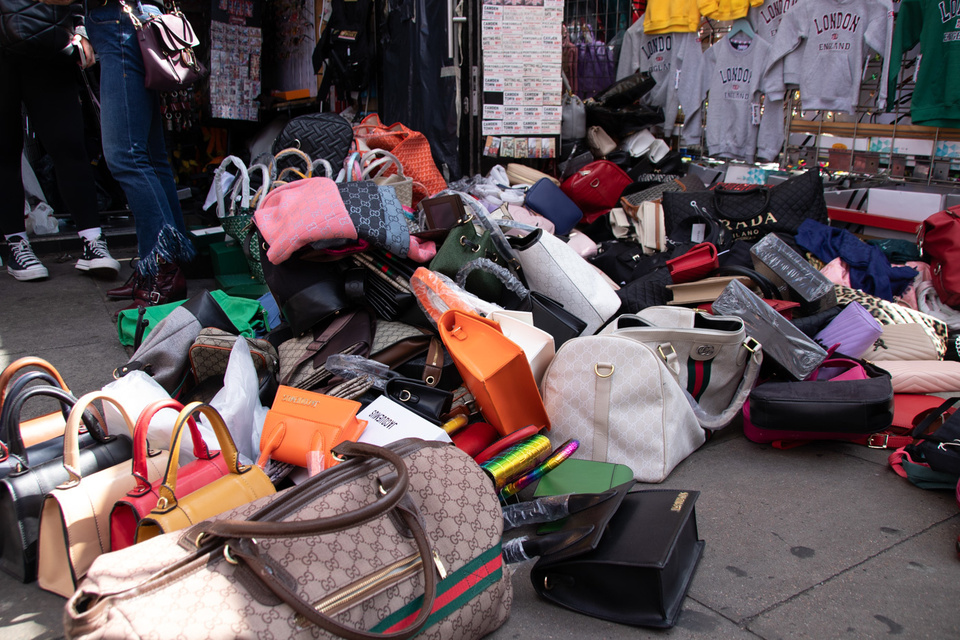
The main highlights are that:
-
the new government guidance aims to help second-hand shoppers?shop safely and confidently and avoid?counterfeits - as the market for pre-loved fashion continues to boom
-
figures released today show 1 in 4?second-hand?clothing buyers?purchased?a counterfeit item?online?in the?last?year?without knowing ?
-
1 in 3 admitted they don’t check authenticity before making a purchase and nearly 60%?experienced?negative outcomes buying fakes - 14% were put off second-hand shopping altogether ?
-
younger shoppers most at risk: Nearly 70%?of Gen Z and Millennials bought pre-loved items last year and almost half of 18–24-year-olds have encountered counterfeit goods when buying pre-loved
-
more than?£4million worth of luxury designer goods were seized in recent raids by police and?Trading Standards?as authorities tackle organised?counterfeiters nation-wide? ?
The Intellectual Property Office (IPO) has today issued new guidance to help second-hand shoppers shop safely and confidently and avoid counterfeits. ?Developed with support from Vinted, the guidance forms part of wider collaboration between government, online marketplaces and enforcement partners to tackle counterfeit sellers online. This supports safe and confident second-hand shopping.
New figures released today by the IPO show 1 in 4 UK pre-loved clothing buyers unknowingly purchasing counterfeits last year.? Nearly 60% of those experienced poor quality, rapid deterioration, or refund disputes with the seller.
Counterfeiters follow consumer demand. The UK’s pre-loved market is booming, growing at around 11% a year.This has made it an increasingly attractive target for criminals. Online resale platforms, like the shoppers who use them, are on the receiving end of this organised criminal activity.
Younger shoppers may be particularly affected. 45% of 18–24 year-olds have encountered counterfeit designer items on resale platforms, compared to 23% of those aged 55–64.
The IPO’s research also shows that in most cases, shoppers had no idea they had bought a fake until it arrived. By then, poor stitching, cheap materials, and inconsistent labelling made the deception clear, but the damage was already done. More than a third (34%) reported frustration at being misled, 33% raised concerns about quality, and 21% experienced poor durability.
For some, the financial impact was significant, with overpayments and protracted refund disputes with the seller adding to the frustration. ?14% said the experience had put them off second-hand shopping altogether, underlining the importance of continued consumer awareness and collaboration across the sector.
The new guidance forms part of Intellectual Property Office’s new ‘Second-hand, not second best’ awareness campaign. It encourages shoppers to choose pre-loved fashion with confidence and avoid the pitfalls of counterfeits.
The confidence gap
Despite?the majority of?shoppers (63%) feeling confident they could spot a fake, one in three admitted they do not check authenticity before?purchasing?an item.?
Of those who had a negative experience with a counterfeit, many became more vigilant afterwards.??26% now do more research before?purchasing, 17% only buy items they can inspect in person, and 17% restrict themselves to authorised resellers with authentication services.?
Genuine second-hand products offer consumers access to legitimate, high-quality items at lower prices than new. Unlike counterfeit goods, genuine pre-owned items carry the quality, craftsmanship and heritage of the original brand and may also retain value over time. Counterfeit products are illegal to sell in the UK and have not undergone the same quality or safety checks as authentic goods.
The guidance has been created to help consumers make informed decisions when buying online. It explains what to look out for when assessing authenticity and know how to use the protections and verification tools already available across many platforms.
Selling counterfeits is prohibited under most online platforms’ Terms and Conditions and may lead to civil and criminal liability. The guidance complements the buyer protection tools and verification features most platforms already have in place.
Beyond disappointment: a case study
The consequences?of?purchasing?a counterfeit?extend?beyond just?disappointment.
Mellissa Davies is?aged 35 and from Aberdare?in South Wales.?She thought she was getting a genuine bargain when she bought a pair of second-hand designer sandals from a seller?on?a resale platform. The price was lower than the recommended retail price?but not suspiciously cheap. She had used the platform previously,?so she had no reason?at first?to doubt their authenticity.?
Her doubts began as soon as the?fake?sandals arrived. The quality immediately?felt wrong:
the materials were flimsy and the design was poorly printed.?Mellissa contacted the seller?immediately to raise her concerns?that the item was not genuine The seller asked her?to return the sandals for a full refund.
But soon after she sent the item back, Mellissa found that the seller had quickly deleted their profile before the platform could investigate the suspicious listing further.? Mellissa was left with neither the sandals nor her money.? Her experience highlights the real risks shoppers can face when counterfeit goods slip into second-hand marketplaces. It also underlines the importance of carefully checking feedback on the seller before parting with payment.?
Mellissa said:
I thought I’d found a genuine bargain. The price seemed reasonable and I’d used the platform before, so I had no reason to be suspicious. But when the sandals arrived it was obvious straight away that something wasn’t right - and by then the seller had vanished along with my money. I’d encourage anyone shopping second-hand to check the seller’s history before they buy. It’s such a simple thing, and it could have saved me a lot of frustration
Mellissa’s experience is far from unique. ?
I bought a fairly expensive designer handbag on a second-hand site. When it?arrived?it was very obviously counterfeit. It took three months to get my money refunded.
Male, 46, East Midlands?
Poor quality – not made properly at all. I hate when they do a blatant fake copy of the logo; it looks awful. I’ve had it with bag zips and the material coming away from the lining.
Female, 44, East Midlands?
I bought what I thought was a high-quality pre-loved shirt online. Not until it arrived?did?I realise it was counterfeit — the texture looked completely different. I eventually threw it away.
Male, 34, London?
Criminals targeted as counterfeit goods seized
The campaign comes as authorities continue enforcement activity against organised counterfeit sellers operating across the UK.
In March,?Bury?Trading Standards seized more than £3 million?worth of?luxury?designer goods from storage facilities as part of a multi-agency operation. Items included footwear, clothing, bags,?watches?and accessories.?Criminal investigations continue.???
In April, the Police Intellectual Property Crime Unit (PIPCU) led a separate operation. A raid on a warehouse in Rotheram resulted in counterfeit clothes and trainers worth more than £1.1 million being seized.
The operation saw officers also?uncover another £1m worth of clothing and trainers which were believed to have been stolen.?The items seized in total by officers filled up four 18-tonne lorries.?
A growing market
The UK pre-loved clothing market continues to thrive, driven by shoppers looking for sustainable and cost-effective alternatives to buying new. ? Data from research undertaken for Barclays shows that?nearly seven?in ten (68%) of Gen Z and Millennials bought pre-loved items last year. Designer brands account for at least some purchases for more than two thirds (67%) of second-hand shoppers. Vinted (49%) and eBay (42%) are the most popular platforms.?
Saving money is a key motivator. The data shows that one in five (19%) shoppers use?second-hand resale?platforms?as a way to?keep their costs down. A further 20% also see them as a source of extra income.
For younger?shoppers?the appeal is particularly strong. One in four (25%) of 16–24 year-olds?say they turn to resale platforms specifically to save money or to free up budget for?new items?on special occasions.
The continued growth of second-hand shopping is also reflected in changing consumer habits. According to Vinted’s latest Impact Report, 88% of buyers now check Vinted before purchasing something new. Additionally, 76% of purchases on Vinted replaced the purchase of a new item.
How to shop safely second-hand
The new guidance aims to help shoppers to use online platforms with confidence and support pre-loved fashion as a safe, sustainable and affordable choice.
While counterfeiters continue to refine their methods to imitate genuine brands,?most?online marketplaces are also strengthening their detection and prevention tools.??
However, as methods of deception evolve, staying vigilant?remains?a shared responsibility. Having the right information is the most effective way to shop safely and confidently.
The new guidance suggests shoppers should?check?an?item’s authenticity before buying?by:??
-
looking?at the seller’s profile and for positive feedback from?previous?buyers- check if they have consistent listing and a history of successful transactions
-
examining?photos for?labels, swing?tags?and sizes - if the item claims to be a high-end designer piece, check the labels match what you would expect
-
checking?for consistency between the photos and the description, such as the product condition and?details about the brand’s features
-
checking?stitching, seams, materials, and logo placement for evenness and quality?when shopping in person or when the goods arrive
-
using?the platform’s integrated payment method rather than transferring money directly to the seller
-
using?platform verification and buyer protection tools?
-
trusting their?pricing instincts - genuine designer pieces rarely sell at suspiciously low prices? ??
Common counterfeit indicators?include misspellings on labels, uneven stitching, cheap or lightweight materials, and poorly reproduced logos. When in doubt, asking the seller for?additional?photographs or documentation before purchasing is a straightforward and effective check.?
Minister for Online Safety?and Intellectual Property?Kanishka Narayan MP?said:
The UK’s pre-loved fashion trade is?a?booming market?that’s good for bargain hunters and for the environment.?
That’s why we’re acting to help shoppers browse with confidence, and spot counterfeits before it’s too late.?No one should have to?gamble that a good deal might be a fake deal.?I’m proud that we’re?working with partners right across?this thriving market to help protect consumers.
Jessie de la Merced, VP Corporate Affairs at Vinted, said:
Trust is central to every transaction on Vinted. Tackling counterfeits is a shared challenge across online retail, which is why collaboration between platforms, government and enforcement partners is so important. We are pleased to support this guidance, which gives consumers practical advice to help them make informed decisions when buying second-hand. Alongside the detection systems, protections and verification tools already available on our platform, we hope this helps people feel even more confident choosing pre-loved.
The Intellectual Property Office’s Head of Enforcement Campaigns and Stakeholder Engagement Helen Barnham said:??
The pre-loved market is a brilliant option for anyone who wants to dress well without breaking the bank. As the market grows, maintaining trust and confidence online becomes even more important.? Second-hand?isn’t?second best — but a counterfeit always is.
As organised criminals seek to infiltrate online markets with counterfeits too many shoppers are being misled by the false promise of a bargain. Our new guidance?gives people the knowledge to shop confidently and make sure second-hand really does mean second to none.
Jen Graham,?@CharityShopGirlcsg?charity shopping?influencer and advocate?said:?
Second-hand should never mean second best but for too many shoppers, it does when counterfeits slip through. The research highlights a clear confidence gap where people think they can spot a fake but often?don’t?check before buying. By sharing simple, practical guidance, we can help shoppers stay one step ahead of counterfeiters and feel confident every time they buy?pre-loved.
Chloe Long, Deputy Director-General, Anti-Counterfeiting Group said:?
The growth of pre-loved fashion is genuinely good news for consumers and for sustainability. ?But counterfeiters have been quick to exploit it, putting shoppers at risk. The consequences go well beyond a disappointing purchase. ?Counterfeits are illegal goods produced without any quality or safety controls, and the trade behind them is frequently linked to serious organised crime. Knowing what to look for before you buy is the simplest and most effective defence, and we would encourage every pre-loved shopper to make use of this new guidance.
What to do if? you’ve?been misled
Shoppers who believe they have?purchased?a counterfeit item should raise a dispute through the platform’s buyer protection and dispute process in the first instance. Complaints can also be made to?Trading Standards?via the?Citizens Advice consumer helpline, or reported to the police via?Report?Fraud, the UK’s national fraud reporting centre.?
?The new guidance is available on the IPO website.