
Millions of families will be better protected from future volatility in global energy prices, as the government accelerates planning and regulatory approvals for two major clean energy projects.
With the conflict in the Middle East driving instability across global fuel markets, the government is taking action to strengthen Britain’s long-term energy independence and deliver clean homegrown power by appointing a Lead Environmental Regulator for Sizewell C and Lighthouse Green Fuels.
The Environment Agency will take the helm as Lead Environmental Regulator, acting as a single point of contact to coordinate streamlined, joined-up advice. This will cut costs and minimise delays, without compromising environmental standards.
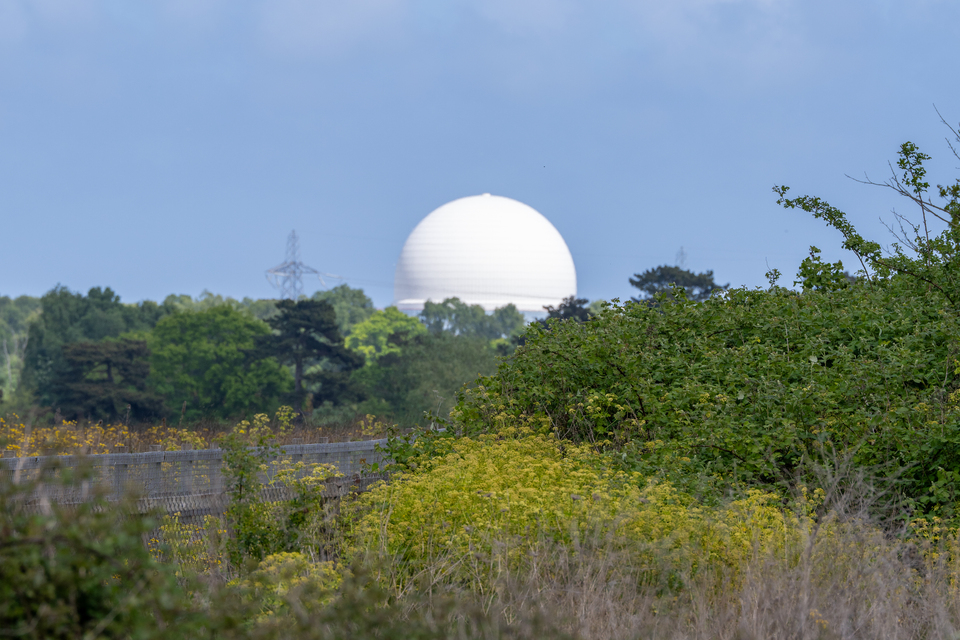
Sizewell C will supply six million homes with clean, British nuclear energy – reducing reliance on foreign imports and protecting families from future energy bill spikes. At the peak of its construction, the multi-billion-pound project will provide around 17,000 direct and indirect jobs, alongside 1,500 apprenticeships that will boost the economy.
Lighthouse Green Fuels is the first major refinery project in the UK for decades and is set to become Europe’s largest second-generation sustainable aviation fuel plant, producing enough fuel for 27,000 flights each year. The project will create 2,000 construction jobs in Teesside and support 3,400 supply chain roles across the UK – establishing a new, green industry and providing communities in some of Britain’s industrial heartlands better access to the well-paid jobs of the future.
Secretary of State for Environment, Food and Rural Affairs, Emma Reynolds said:
We are taking back control of our energy supply to bring stability for families and create skilled jobs for local people, without compromising on environmental protections.
Global shocks from conflicts in Ukraine and the Middle East show that relying on a volatile global fossil fuel market is simply not sustainable for Britain. These measures are a win-win for energy security, nature and for keeping bills down in the long run.
Environment Agency Chief Executive Philip Duffy said:
The Environment Agency’s mission is to protect and enhance the environment while supporting the sustainable growth that communities and businesses need. Sizewell C and Lighthouse Green Fuels are exactly the kind of clean energy projects where those goals align.
We are pleased to be able to play a key role as Lead Environmental Regulator for both projects, bringing the developers and regulators together to prevent environmental damage and streamline approvals.
Nuclear Minister Patrick Vallance said:
We are steaming ahead with implementing the Nuclear Regulatory Taskforce reforms, including assigning one lead regulator to get nuclear energy projects built faster while ensuring good outcomes for safety and nature.
Only clean, homegrown power will deliver energy security and bring down bills for good.
Mina Golshan CBE, Safety, Security and Assurance Director at Sizewell C, said:
This is exactly the kind of culture change our sector needs. Simplifying regulation like this will lead to better outcomes for the environment, greater efficiencies for our project, and better value for consumers.
It gives us a simple framework to build on our already constructive relationship with the Environment Agency – and we embrace the opportunity to demonstrate how regulation can work more effectively and efficiently for both project delivery and environmental protection.
Sizewell C is vital for the UK’s energy security – and today’s announcement will further empower us to deliver this project with the best value for Britain.
Noaman Al Adhami, UK Country Head for Alfanar Projects, said:
We welcome the opportunity to support Defra’s Lead Environmental Regulator pilot, which represents an important step forward in streamlining engagement with statutory bodies and accelerating the delivery of major infrastructure projects.
By enabling earlier, more coordinated regulatory input, this initiative will help unlock investment and support the timely progression of projects like Lighthouse Green Fuels as we advance towards construction.
This pilot also plays a vital role in supporting the government’s wider ambition to accelerate infrastructure delivery and strengthen its industrial strategy. We are proud that LGF can contribute to this effort while helping to establish a new low-carbon industry in the UK.
Transforming Britain into a clean energy superpower is a fundamental pillar of the government’s Plan for Change. The ongoing conflict in the Middle East underlines why this government has the right plan on energy security. Every wind turbine, solar panel and nuclear project gets us one step closer to wrestling control of our energy supply away from foreign dictators and the grip of conflict.
With the landmark Planning and Infrastructure Act now law, the government is pressing ahead at pace to implement seismic changes that will speed up approvals for major wind, solar, water and nuclear projects. A new roadmap has been published to confirm when each measure is switched on to make decisions on nationally significant infrastructure projects faster, including changes to slash a year off the pre-application consultation period, which is expected to come into force in the coming months.
As the conflict in the Middle East continues, this government is doing everything it can to shield households from the economic impact at home. Households will save an average of £117 on their energy bills thanks to last’s week fall in the price cap – and remains at that level until the summer.
The measures set out in government’s response to the Nuclear Regulatory Review 2025, combined with the lead environmental regulator model, will strengthen the overall regulatory framework for the nuclear sector, meaning less bureaucracy, faster decisions, and ultimately cheaper, cleaner energy for people sooner.