
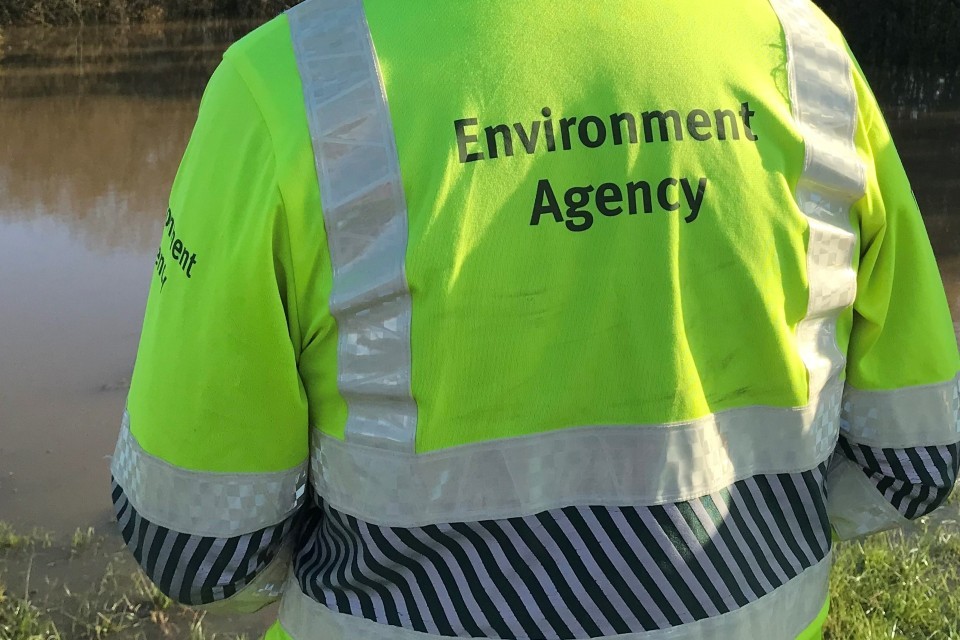
The Environment Agency has issued a warning letter to the River Roding Trust in east London following an investigation into unpermitted work carried out at Alders Brook, in Ilford.
This follows previous warnings about damage that was done to a flood defence at Hertford Road, in Barking.
The investigation found that work at Alders Brook in March this year damaged wildlife habitats, and led to the spread of invasive species Japanese knotweed, due to a failure to follow biosecurity protocols.
In an incident last July, the trust also gained unauthorised access to private land and damaged the flood defence at Hertford Road that residents and businesses depend on for protection from flooding.
The Environment Agency concluded that warning letters were a proportionate response on this occasion, recognising the trust’s genuine commitment to improving the local environment.
An Environment Agency spokesperson said:
Ultimately, this isn’t just about permits. It’s about trying to prevent actual damage to the environment we are all seeking to improve.
The Environment Agency and River Roding Trust share the same goal of protecting the River Roding. We have invited the trust to meet with us, and we look forward to discussing next steps with them, including helping the trust navigate the permit process.
The Environment Agency welcomes and supports all groups that want to improve their local environment – and has excellent working relationships with hundreds of volunteers and groups across London’s many rivers. However, how work is carried out is essential to achieving the best outcomes for the environment.
Urban rivers such as the Roding face challenges to their water quality. The Environment Agency is working with partners to strategically address misconnections and investigate polluting outfalls across the Roding catchment. The Environment Agency and the River Roding Trust share the same goal for the River Roding.
The Environment Agency works with the Roding, Beam and Ingrebourne Catchment Partnership and the River Roding Trust on the misconnections issue and rectifying work has started on a priority area, Cran Brook.
The River Roding Trust has been part of a project collating data which will be used to prioritise further work and inform investment programmes, ensuring a coordinated, evidence-led approach across partners to improve water quality.
Background:
Alders Brook, Ilford:
The spreading of invasive species on site was confirmed. There was also the potential of spreading off-site as it would appear biosecurity protocols were not followed. How to stop Japanese knotweed from spreading - GOV.UK.
The cleared trees, scrub, and bank vegetation offered good habitat for several species – providing food, shelter, and nesting.
We have visually confirmed the dredging carried out was not compliant with the relevant regulations, and there will have been damaging environmental impacts on the riverbed and banks as the channel was deepened and widened. It will also have disturbed sediment, which may have released possible polluting silt, which travelled downstream.
The work should have had a flood-risk activity permit, or FRAP, that covered the different parts of the work the River Roding Trust carried out:
- Dredging, raising, or removing any material from a main river, including when intending to improve flow in the river, or use the removed materials.
- Diverting or impounding the flow of water, or changing the level of water in a main river.
- Quarrying or excavation within 16 metres of any main river, flood defence, including a remote defence, or culvert.
- Any activity within eight metres of the bank of a main river, or 16 metres if it is a tidal main river.
- Removal and disposal of the silt and invasive species may have also required a permit.
Hertford Road, Barking:
The Thames tidal defence is supported by tie-rods, which were exposed during the excavation of a new pond the River Roding Trust created. Surveys to assess the potential impact of this work show it changed the operation on the defence, which could lead to future issues.
The land around this area is low-lying, so if this defence were to fail, the consequence of flooding could be significant and include land and buildings that are used by the Metropolitan Police. The landowner has voluntarily agreed to carry out remedial work, which is planned for later this year.
Misconnections:
Misconnections are when buildings’ waste pipes have been misconnected incorrectly to surface water pipes. This is a major contributor to poor water quality across north London’s rivers, including the Roding.
The Environment Agency investigates polluting outfalls across the Roding, Beam, and Ingrebourne catchment, and works closely with Thames Water’s environmental protection team through regular stakeholder engagement calls.
Thames Water has a surface water outfall programme, or SWOP, to investigate and trace misconnections. The Environment Agency meets regularly with Thames Water to direct this programme and engages with them on signing-off completed work.
The Environment Agency also co-chairs the regional misconnections strategy group, covering all of Thames Water’s catchments, including the River Roding. This group takes a strategic approach to addressing misconnections through partnership-working.
Projects on Cran Brook around Valentines Park have been identified, and work has started on the rectification of the misconnections.
The Environment Agency has been supportive of ongoing work led by the River Roding Trust in collaboration with Thames 21, funded by Thames Water, and which has focused on assessing and ranking sewage outfalls along the River Roding.
This data will be used to prioritise high-risk outfalls, target investigation and remediation work, and inform Thames Water’s investment programmes, ensuring a co-ordinated, evidence-led approach across partners to improve water quality.
Breaking into Environment Agency flood defences:
The Environment Agency must ensure safety controls are in place to best protect the public, even on land we do not own, such as at Alders Brook. Risk assessments, signage, controls and locks are in place to protect everyone.
Some typical public safety hazards could include:
-
Steep or unprotected drops
-
Fast flowing water and currents
-
Confined spaces
-
Unprotected machinery or operational equipment
-
Trip hazards, unstable surfaces
On several occasions, including for the work on Alders Brook, the River Roding Trust accessed our asset without the Environment Agency’s permission. This put people at risk and is unacceptable.
Landowner responsibilities:
Landowners, rather than the Environment Agency, have various rights regarding the watercourses they own. There are some responsibilities that relate to flow and water quality, in what they must receive and pass along, but most rights are exercised at their discretion, such as keeping the land clean and tidy.
For flood-risk purposes, the Environment Agency’s statutory role is to regulate the activities that can cause harm to main rivers and their floodplains to ensure efficient drainage and flood protection, and also to minimise or avoid environmental harm.
The regulatory framework, which can sometimes feel like a series of procedural hurdles, is designed to achieve this and protect rivers, homes, habitats and communities across England.
Contact us:
Journalists’ media enquiries only: 0800 141 2743 or communications_se@environment-agency.gov.uk
If you are not a journalist: 03708 506 506 or enquiries@environment-agency.gov.uk
Please note: verbal or written abuse of Environment Agency staff over this matter or anything else is unacceptable and will not be tolerated.